Published by AICodeNews Editorial Team | September 17, 2026
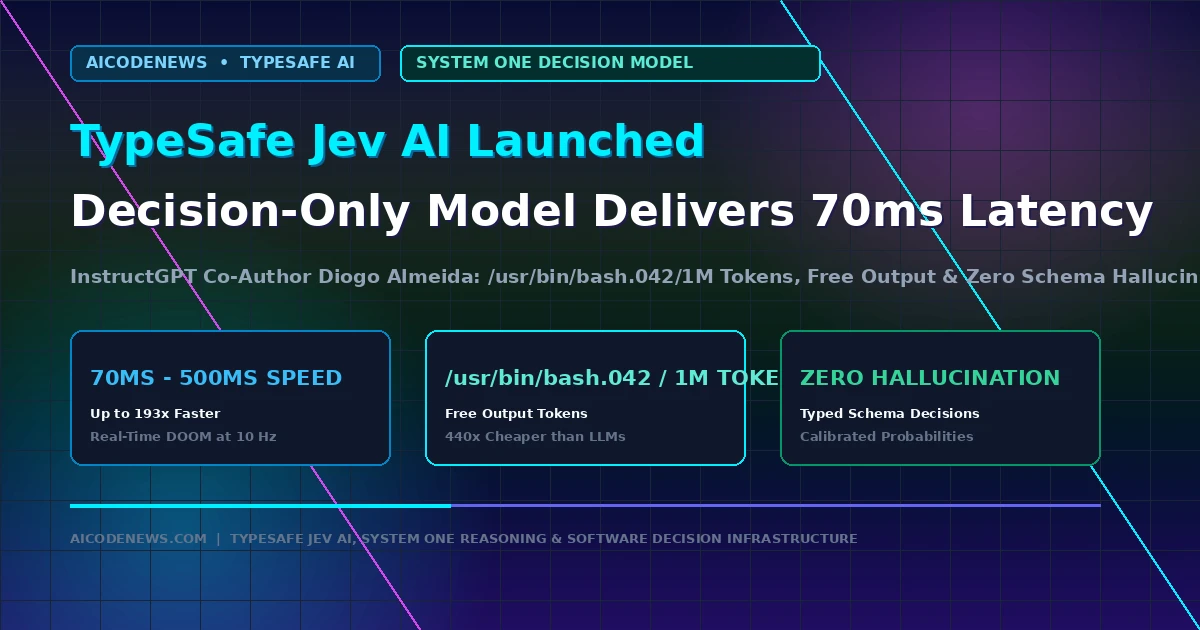
Abandoning conversational text generation in favor of fast, structured software decisions, TypeSafe Jev AI has officially been unveiled by TypeSafe AI and InstructGPT co-author Diogo Almeida.
Announced across official developer channels on typesafe.ai and shared by founder Diogo Almeida (@CompleteSkeptic), TypeSafe Jev AI introduces a new model class described as “System One” AI. Instead of generating open-ended prose word-by-word, the model evaluates state data against pre-declared schemas, delivering typed decisions and calibrated probabilities in 70 to 500 milliseconds at a disruptive cost of $0.042 per million input tokens with completely free output.
1. What Is TypeSafe Jev AI?
Most production AI workflows inside software engineering do not actually need an essay; they need an instant answer to a narrow, high-frequency question: Which support queue gets this ticket? Is this database mutation safe? Should this user invoice require human review? Rather than generating paragraphs or code snippets, TypeSafe Jev AI takes two inputs: a raw state context and typed questions:
Zero Schema Hallucination Guarantee: Because candidate outputs are strictly bound to pre-defined enums and types, the model mathematically cannot emit syntax outside your application’s schema.
Native Probability Calibration: Every decision returns confidence scores directly sampled at the model layer, allowing engineering pipelines to send low-confidence edge cases to human review automatically.
High-Frequency Real-Time Execution: In live demonstrations, developers ran Jev at 10 decisions per second (10 Hz) playing DOOM in real-time—executing tactical dodging and weapon switching for an entire hour for just $7.
2. Standard LLM Generation vs. TypeSafe Jev AI Architecture
The architectural trade-off replaces open-ended chatting with rapid programmatic evaluation:
Architecture Dimension
Standard Generative LLMs (e.g. GPT-5.6 / Claude)
TypeSafe Jev AI
Output Mode
Auto-regressive token generation (Text/JSON)
Direct typed decision sampling
Inference Latency
800ms – 3,500ms
70ms – 500ms (Up to 193x faster)
Input Pricing / 1M
$2.00 – $10.00
$0.042 (440x cheaper)
Output Pricing / 1M
$10.00 – $50.00
$0.00 (Completely Free Output)
Hallucination Risk
Frequent string/schema format errors
Zero structural hallucination
3. Developer Integration & Real-World Use Cases
The economic disruption of TypeSafe Jev AI is driven by its pricing structure: $0.042 per million input tokens with zero charge for output. The model is accessible via official Python and TypeScript REST SDKs, making it a drop-in replacement for triage routers, fraud classification gates, and autonomous agent routing layers.
4. Key Takeaways on TypeSafe Jev AI
Decision-Only Shift: TypeSafe Jev AI sacrifices conversational text generation to achieve instant, typed software decisions.
Disruptive Token Economics: $0.042/1M input pricing and free output make high-frequency background agent checks economically negligible.
Sub-500ms Reliability: Delivers calibrated probabilities with zero structural hallucination for automated software pipelines.
Bookmark AICodeNews.com for daily updates on novel AI architectures, developer models, and inference economics.
Published by AICodeNews Editorial Team | September 11, 2026
In a major architectural milestone that streamlines full-stack and AI agent development, Cloudflare Workers Node.js Compatibility has officially been activated by default across all serverless isolates.
Announced on the official Cloudflare Blog, the upgraded Cloudflare Workers Node.js Compatibility overhaul rebuilds Workers’ internal module registry. By providing native, in-runtime implementations of Node core APIs (including node:buffer, node:crypto, node:stream, and node:events), developers can now deploy standard npm packages, Model Context Protocol (MCP) servers, and agent frameworks directly to the edge without complex build-time polyfills or bundler workarounds.
1. Why Cloudflare Workers Node.js Compatibility Was Rebuilt
Historically, running modern AI agent frameworks on edge workers required custom esbuild shims, often resulting in ballooning bundle sizes and broken Node-specific dependencies. The new Cloudflare Workers Node.js Compatibility architecture eliminates these friction points:
Native In-Isolate Node Implementations: Core Node modules run directly inside the underlying V8 isolate runtime, improving execution performance and cutting bundle sizes by up to 60%.
Seamless AI Agent Tool Hosting: Frameworks like LangChain, OpenClaw gateways, and FastMCP servers deploy out of the box with zero configuration flags.
Instant Package Portability: Standard npm libraries that rely on Node async streams and cryptographic hashing work immediately without polyfill degradation.
2. Legacy Workers Polyfills vs. Default Node.js Compatibility
The transition to default Cloudflare Workers Node.js Compatibility applies automatically to all new Workers and Pages deployments globally. Existing projects can remove legacy polyfill plugins from their build pipelines immediately, benefiting from faster cold-start initialization and streamlined continuous integration builds.
4. Key Takeaways on Cloudflare Workers Node.js Compatibility
Zero-Config Edge Development: Cloudflare Workers Node.js Compatibility runs standard Node APIs natively across all edge isolates.
Published by AICodeNews Editorial Team | September 8, 2026
In a surprise developer preview, DeepSeek V4.1 Flash has officially launched across the DeepSeek API platform under the intermediate test endpoint deepseek-v4.1-flash-expires-on-0910.
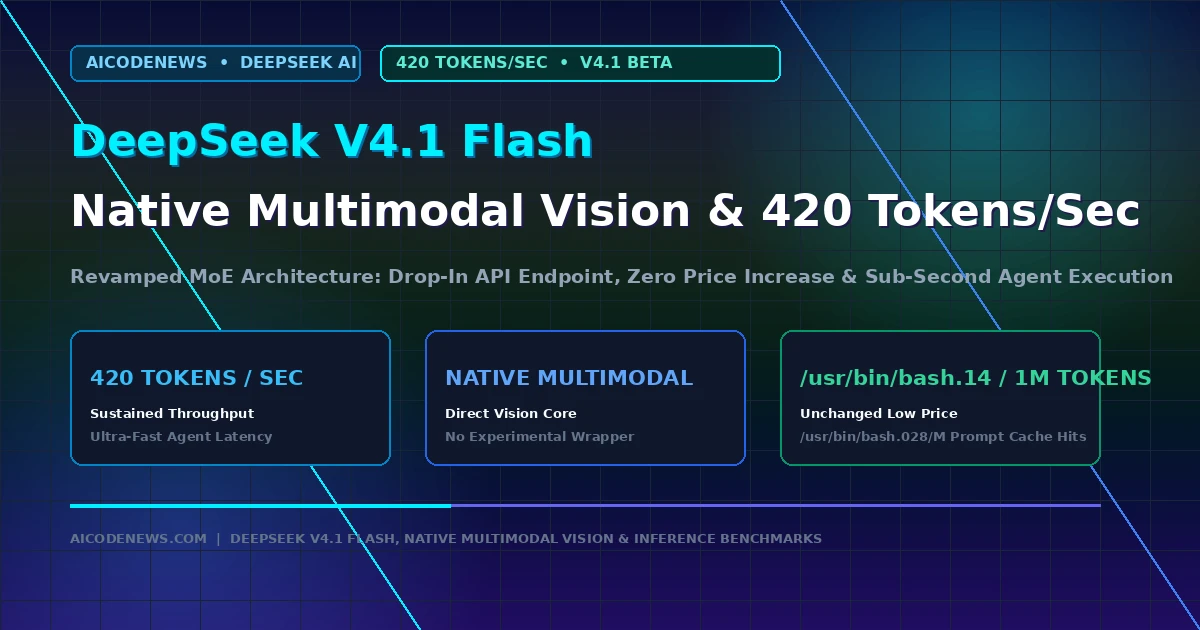
Released as an invite-and-feedback evaluation preview on the official DeepSeek API Platform, DeepSeek V4.1 Flash introduces a revamped Mixture-of-Experts (MoE) architecture with native multimodal vision capabilities, ultra-fast token output speeds, and identical pricing to the existing V4-Flash production tier.
1. What Is New in DeepSeek V4.1 Flash?
The release marks a significant intermediate architectural leap for DeepSeek’s lightweight model family:
Blazing 420 Tokens/Second Throughput: Initial benchmark telemetry shows that DeepSeek V4.1 Flash achieves sustained generation speeds of up to 420 tokens per second during multi-turn completion tasks, substantially reducing latency for autonomous agent loops and terminal code generation.
Native Multimodal Vision Integration: Unlike earlier iterations that required separate experimental vision wrappers, the new architecture processes images, charts, and terminal screenshots directly within the primary context window.
Unchanged Low-Cost Pricing: DeepSeek has maintained its industry-disrupting pricing structure at $0.14 per 1M input tokens and $0.28 per 1M output tokens, with prompt cache hits dropping input costs to $0.028 per 1M tokens.
Drop-In API Compatibility: Developers do not need to change their existing base_url (https://api.deepseek.com). Simply updating the model parameter to deepseek-v4.1-flash-expires-on-0910 immediately routes traffic to the new preview.
2. DeepSeek V4 Flash vs. DeepSeek V4.1 Flash Architecture Breakdown
This technical comparison highlights the performance differences between the current production release and the new preview endpoint:
To test DeepSeek V4.1 Flash, developers can maintain their existing OpenAI SDK or DeepSeek Harness configurations and update the model string in their environment settings. DeepSeek has placed an initial rate limit of 20 concurrent connections per account to manage server capacity while gathering community feedback through its official questionnaire ahead of a full general availability rollout.
4. Key Takeaways on DeepSeek V4.1 Flash
Speed Record: DeepSeek V4.1 Flash reaches up to 420 tokens per second, making it one of the fastest frontier-grade reasoning models available.
Native Multimodality: Directly processes visual inputs and text simultaneously with zero wrapper overhead.
Same Ultra-Low Pricing: Maintains identical $0.14/1M input pricing with a seamless drop-in endpoint change.
Bookmark AICodeNews.com for daily coverage on open-source AI models, developer tooling benchmarks, and API pricing updates.
Published by AICodeNews Editorial Team | September 2, 2026
In a major frontier intelligence update for software engineering and scientific research, Claude Fable 5.1 and Mythos 5.1 have officially launched across official Anthropic developer channels.
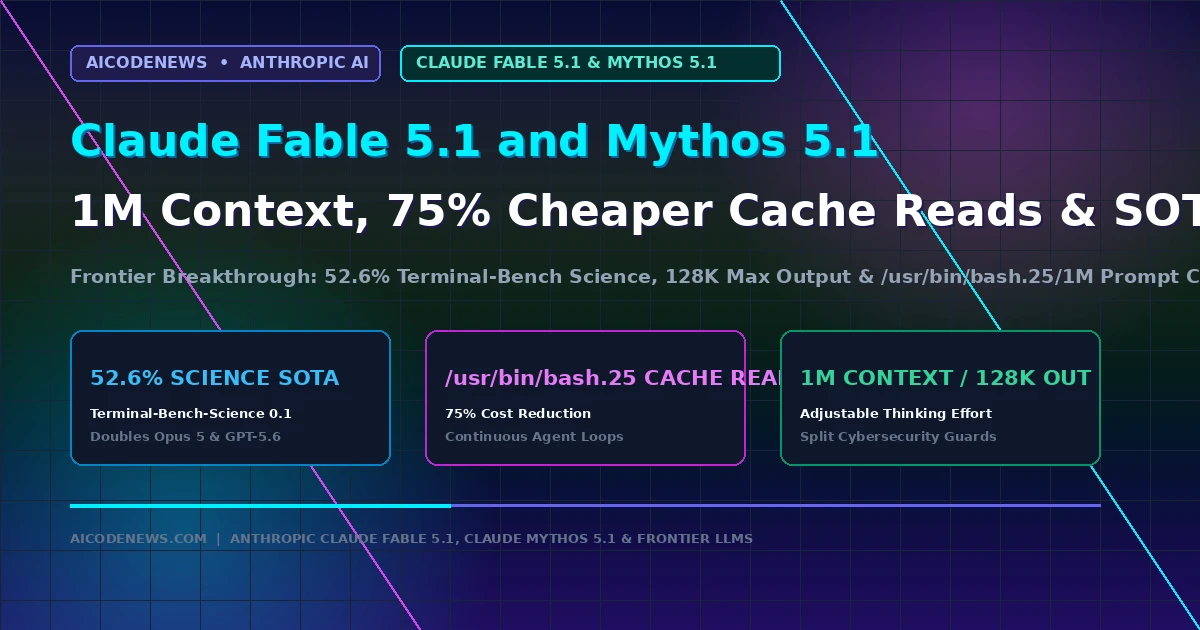
Announced on the official Anthropic Newsroom and deployed across Claude Code and the Claude Console API, Claude Fable 5.1 and Mythos 5.1 share the same underlying frontier weights while applying differentiated deployment safeguards. The release delivers a massive 1-million-token context window, 128k maximum output capacity, adjustable thinking effort levels, and a 75% cost reduction on prompt cache reads.
Claude Fable 5.1 (claude-fable-5-1): Generally available for coding, long-horizon agentic task execution, and scientific knowledge work. Features refined safeguards that allow the model to identify source-code vulnerabilities while reducing false refusals on benign biology requests by 85%.
Claude Mythos 5.1 (claude-mythos-5-1): Restricted to vetted institutional organizations through trusted access programs (such as Project Glasswing) for specialized cybersecurity defense and biology research.
Adjustable Thinking Effort: Introduces five selectable reasoning levels (low, medium, high, xhigh, max) supported mid-conversation via beta headers.
2. Benchmark Breakdown & Science SOTA for Claude Fable 5.1 and Mythos 5.1
On benchmark leaderboards, Claude Fable 5.1 and Mythos 5.1 established dominant new state-of-the-art results in autonomous reasoning:
3. Token Economics & 75% Cheaper Cache Reads in Claude Fable 5.1 and Mythos 5.1
While base input remains $10 per million tokens and output remains $50 per million tokens, the defining architectural improvement in Claude Fable 5.1 and Mythos 5.1 is its aggressive prompt caching discount:
$0.25 / 1M Cache Reads: Prompt cache hits fall from $1.00 down to $0.25 per million tokens, cutting operating expenses by 25% to 45% for developers running multi-turn autonomous loops in Claude Code and Cursor.
128k Completion Horizon: Generates up to 128,000 output tokens in a single inference call, enabling whole-application synthesis and full audit report generation without chunking.
The deployment of Claude Fable 5.1 and Mythos 5.1 across the developer ecosystem centers on differentiated access and refined safety weights. While the models are deployed via the Claude Console API and Claude Code, institutional availability extends through trusted channels.
Anthropic leverages a dual-configuration approach. Fable 5.1 remains accessible for general coding and agentic tasks, while Mythos 5.1 is restricted to vetted organizations via programs like Project Glasswing. This ensures specialized research in biology and cybersecurity is conducted within secured, institutional environments.
By reducing false refusals on benign requests by 85%, the new architecture allows developers to identify source-code vulnerabilities more effectively without hitting rigid safety walls. These updates are rolling out across major cloud partner environments including AWS Bedrock and Google Vertex AI, ensuring frontier intelligence is available where enterprise data resides.
5. Key Takeaways on Claude Fable 5.1 and Mythos 5.1
Unified Frontier Base: Claude Fable 5.1 and Mythos 5.1 share identical underlying weights, providing 1M context tokens and 128k maximum output.
Published by AICodeNews Editorial Team | August 29, 2026
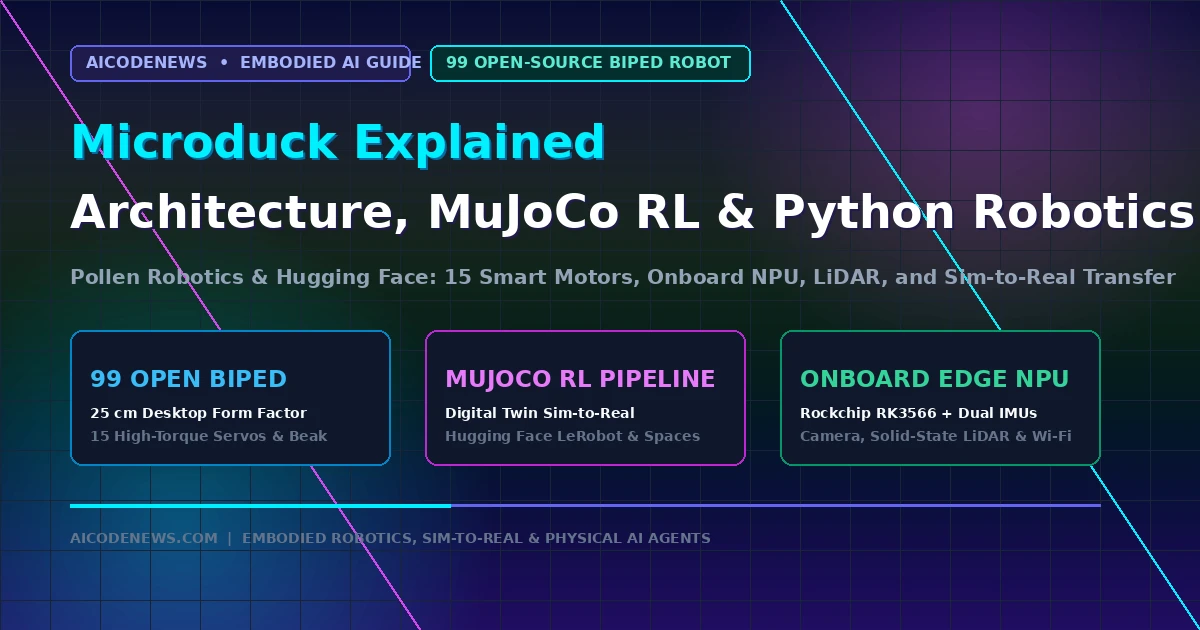
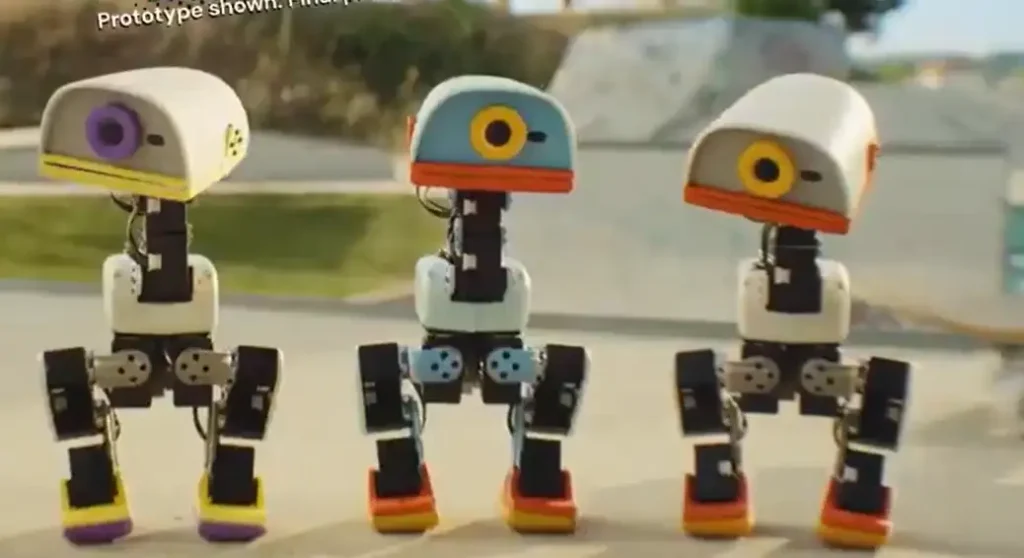
In a major breakthrough for physical AI and embodied robotics, Microduck has been officially unveiled as an open-source 25 cm biped robot co-developed by Pollen Robotics and Hugging Face.
Priced at an accessible $399 and backed by full simulation environments on Hugging Face Spaces, Microduck bridges the gap between digital reinforcement learning (RL) models and real-world physical actuation. This in-depth guide covers Microduck Explained from first principles, detailing its onboard compute, MuJoCo physics simulation, and step-by-step Python programming.
1. What Is Microduck? The Biped Platform for AI Makers
For years, embodied robotics research has been bottlenecked by prohibitive hardware costs. High-end humanoid bipeds typically cost tens of thousands of dollars, restricting reinforcement learning experiments to well-funded academic labs.
Microduck changes that equation entirely. Standing just 25 cm tall, it provides software engineers and AI builders with a fully articulated, programmable desktop robot that learns locomotion policies directly in physics simulators before running on real hardware.
Unlike rigid toy robots with pre-baked hardcoded routines, Microduck is built specifically for machine learning. Every joint angle, sensor stream, and motor torque value is completely exposed via open-source Python APIs and Hugging Face’s LeRobot framework.
2. Hardware Architecture & Sensor Array of Microduck
Despite its compact desktop footprint, Microduck packs an enterprise-grade sensor and compute payload:
15 High-Torque Smart Servos: Actuates 5 degrees of freedom (DoF) per leg, 2 DoF in the neck, and an articulated beak gripper designed to pick up small objects.
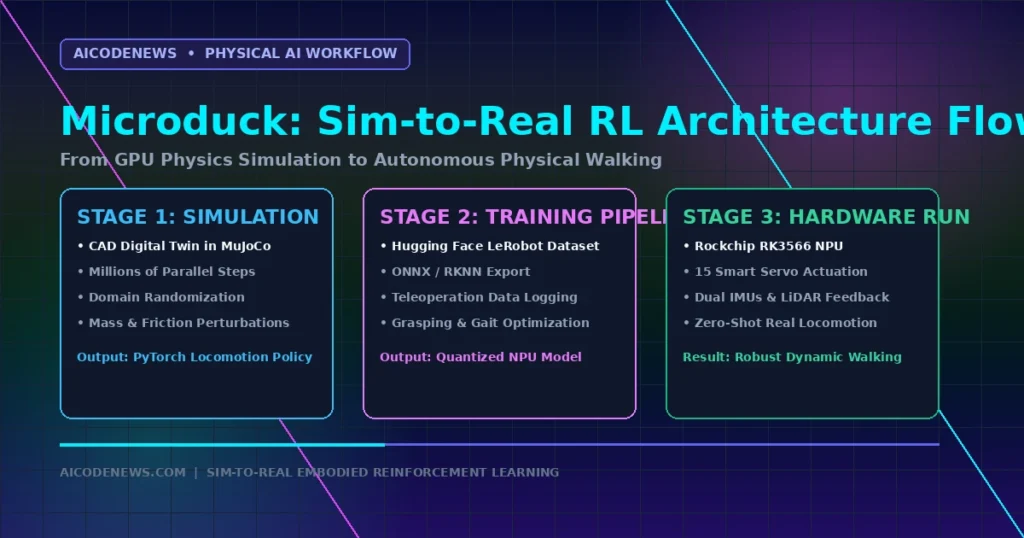
Onboard Edge Compute: Powered by a Rockchip RK3566 processor paired with a dedicated Neural Processing Unit (NPU) for real-time edge policy inference.
Multimodal Perception Suite: Equipped with a forward-facing wide-angle camera, a miniature solid-state LiDAR depth sensor, and dual 6-axis Inertial Measurement Units (IMUs) in the torso and feet.
Connectivity & Power: Dual-band Wi-Fi, Bluetooth 5.2, USB-C serial diagnostics, and a hot-swappable LiPo battery pack offering 45 minutes of continuous dynamic locomotion.
3. Sim-to-Real Reinforcement Learning: How Microduck Learns to Walk
The core innovation behind Micro duck is its seamless Sim-to-Real pipeline. Rather than risking mechanical wear by training in the physical world, policies are trained in thousands of parallel MuJoCo simulations on GPU clusters:
Step 1 (MuJoCo Physics Simulation): Exact Onshape CAD digital twins simulate gravity, friction, motor latency, and joint backlash across millions of synthetic steps.
Step 2 (Domain Randomization): Randomizing mass, floor friction, and sensor noise during training ensures the neural network policy generalizes robustly to real-world irregularities.
Step 3 (Zero-Shot Hardware Deployment): The trained PyTorch policy weights are exported to ONNX/RKNN format and flashed onto the robot’s onboard NPU for zero-latency execution.
4. Hands-On Python Code: Controlling Micro duck via SDK
Developers can interact with Microduck over local Wi-Fi or USB-C using the official open-source Python SDK:
import time
from microduck import MicroDuck

# Initialize connection to the robot over local network
duck = MicroDuck(ip_address="192.168.1.142")

# Calibrate sensors and stand upright
duck.calibrate_imus()
duck.stand(height_mm=220)

print("Battery Level:", duck.get_battery_percentage(), "%")
print("IMU Pitch & Roll:", duck.get_orientation())

# Execute a trained dynamic walking policy
try:
    print("Executing forward bipedal gait...")
    duck.walk(velocity_x=0.15, yaw_rate=0.0)
    time.sleep(5.0)
finally:
    # Safely crouch and disable motor torque
    duck.crouch()
    duck.disable_torque()
    duck.close()
5. Microduck vs. Traditional Robotics Platforms
This comparison shows how Micro duck stacks up against other popular open-source and commercial robotics platforms:
Platform Feature
Pollen / HF Microduck
Unitree Go2 (Quadruped)
TurtleBot 4 (Wheeled)
Price Point
$399 (Accessible)
$1,600 – $2,800
$1,850
Locomotion Type
Dynamic 2-Leg Biped
4-Leg Quadruped
Differential 2-Wheel Base
Simulation Stack
MuJoCo + Hugging Face Spaces
Isaac Gym
Gazebo / ROS 2
Open-Source Depth
100% Open CAD + Code
Proprietary firmware
Open-source ROS 2 wrapper
Target Audience
AI Researchers & Makers
Robotics labs
Academic classrooms
6. Developer FAQ on Microduck
Can I train custom policies in simulation without owning the physical robot?
Yes. The complete Micro duck physics model is freely available on Hugging Face Spaces and GitHub, allowing you to train RL policies in MuJoCo inside Google Colab or your local GPU workstation.
Does Microduck support Model Context Protocol (MCP) tool integration?
Yes. Because the Python SDK exposes clean modular functions, you can wrap Micro duck commands inside FastMCP servers to let autonomous agents (like Claude Code or Cursor) command the robot via natural language.
7. Key Takeaways
Democratizing Biped Robotics: Micro duck delivers a 25 cm, 15-motor open-source biped for $399, removing the financial barrier to physical AI research.
MuJoCo Sim-to-Real: Train dynamic locomotion and grasping policies in parallel physics simulations before deploying directly to edge hardware.
Hugging Face LeRobot Integration: Native support for open-source robotics models, datasets, and community Spaces.
Bookmark AICodeNews.com for daily coverage on embodied AI, open-source robotics, and developer infrastructure.
Published by AICodeNews Editorial Team | August 21, 2026
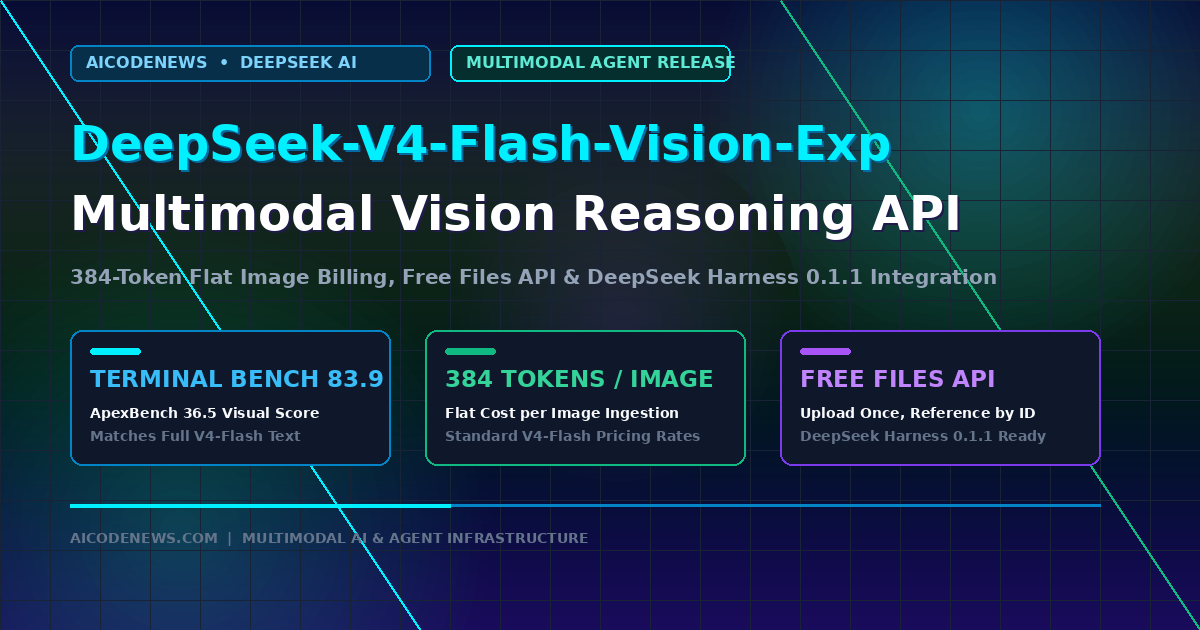
In a major multimodal upgrade to its low-cost model lineup, DeepSeek has officially released DeepSeek-V4-Flash-Vision-Exp, adding high-speed visual reasoning and chart analysis while matching the full text and coding performance of the base V4-Flash model.
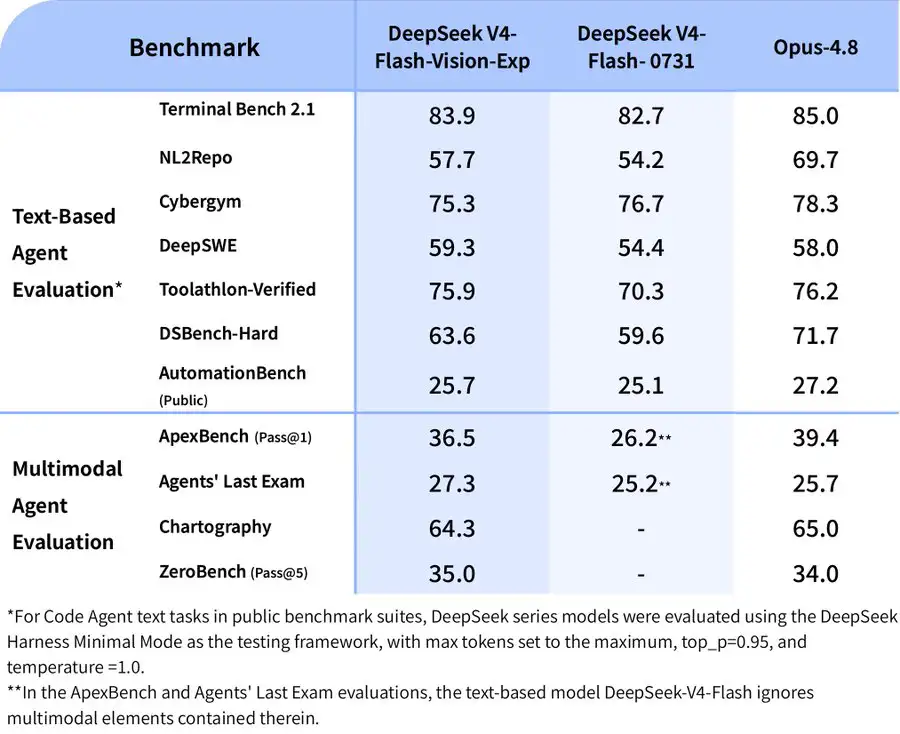
Announced directly on the official DeepSeek API Platform, DeepSeek-V4-Flash-Vision-Exp elevates open-weights multimodal agent performance, closing the capability gap with closed models on benchmark suites like Terminal Bench (83.9) and ApexBench (36.5).
1. Multimodal Benchmarks & Vision Capabilities for DeepSeek-V4-Flash-Vision-Exp
While previous lightweight vision models struggled with dense UI layouts and technical schematics, DeepSeek-V4-Flash-Vision-Exp is engineered for autonomous agent computer use and document parsing:
Terminal Bench Score (83.9): Excels at interpreting CLI terminal outputs, error stack traces, and multi-window developer workflows.
ApexBench Visual Accuracy (36.5): High precision in extracting data from multi-column PDF tables, system architecture flowcharts, and financial charts.
Zero Compromise on Text & Code: Retains 100% of the reasoning, coding logic, and world knowledge of the standard V4-Flash model.
2. API Architecture, 384-Token Pricing & The New Files API
Developers can begin using DeepSeek-V4-Flash-Vision-Exp immediately across production developer endpoints using standard Chat Completions, Messages, and Responses APIs:
Feature / Parameter
Specification / Capability
Model Identifier
deepseek-v4-flash-vision-exp
Image Tokenization & Pricing
Capped at max 384 tokens per image at standard V4-Flash pricing rates
Input Formats
Mixed text + image via Base64, external image URLs, or the new Files API
New Files API
100% Free: Upload an image once, reference by file_id to save request payload bandwidth
Ecosystem Support
Day-one support in DeepSeek Harness 0.1.1, OpenCode, and OpenRouter
The companion release of DeepSeek Harness 0.1.1 provides out-of-the-box support, allowing autonomous agents to stream visual desktop frames and inspect local code artifacts without manual token chunking.
3. Key Takeaways on DeepSeek-V4-Flash-Vision-Exp
Experimental Multimodal Release: DeepSeek-V4-Flash-Vision-Exp brings image comprehension to the low-cost V4-Flash tier.
Predictable Image Billing: Flat 384-token billing cap per image makes high-volume visual agent pipelines economical.
Free Files API: Eliminates redundant image re-uploads by referencing persistent file IDs across multi-turn chat sessions.
Bookmark AICodeNews.com for daily coverage on multimodal AI models, agent frameworks, and developer API releases.
Published by AICodeNews Editorial Team | August 21, 2026
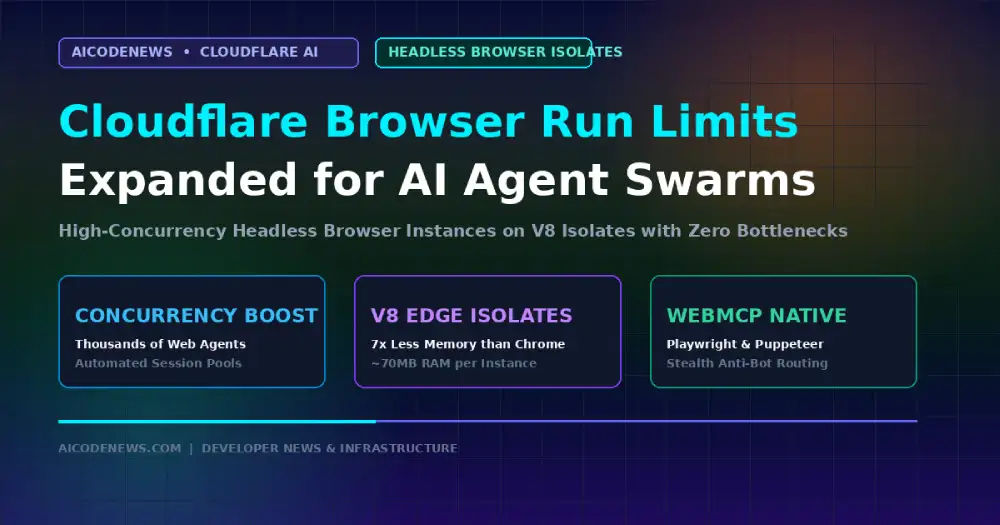
To support enterprise autonomous web agents and large-scale data extraction pipelines, Cloudflare Browser Run Limits have officially expanded across Cloudflare’s global edge network.
Announced on the official Cloudflare Changelog, the expanded Cloudflare Browser Run Limits allow developers to spin up thousands of concurrent headless browser instances inside lightweight V8 isolates with automated session pooling.
1. Why Cloudflare Browser Run Limits Were Upgraded
As autonomous AI agents shift from passive text completion to active web operations (form-filling, UI testing, competitive price monitoring), legacy headless browser limits created infrastructure bottlenecks:
High-Density Concurrency Scaling: The expanded Browser Run Limits enable enterprise accounts to run parallel browser swarms without experiencing connection queue timeouts.
Optimized Kitesurf Integration: Built to complement Cloudflare’s newly released Kitesurf browser engine, reducing memory overhead to ~70MB per active agent instance.
Session Persistence & Anti-Bot Stealth: Includes native cookie synchronization and residential IP routing to prevent AI agents from triggering CAPTCHA blocks during automated data ingestion.
2. Developer Provisioning for Cloudflare Browser Run Limits
Taking advantage of the new Cloudflare Browser Run Limits is streamlined for existing Cloudflare Workers developers:
Dashboard & API Quota Requests: Teams requiring custom enterprise concurrency thresholds can request instant limit increases directly through the Cloudflare developer dashboard.
Standard Playwright & Puppeteer Compatibility: Connect existing agent automation scripts using standard WebSocket endpoints with zero code refactoring.
3. Key Takeaways
Massive Concurrency Boost: Cloudflare Browser Run Limits expanded to handle high-frequency autonomous agent browser swarms.
V8 Edge Efficiency: Runs in lightweight isolates, cutting server RAM consumption by up to 7x compared to standard Chromium.
Zero-Config Tool Integration: Native support for WebMCP, Playwright, and Puppeteer agent connectors.
Follow AICodeNews.com for daily updates on cloud edge computing, browser automation, and AI developer infrastructure.
If you are looking for the Best Open Source AI Coding Assistant to replace expensive proprietary subscriptions or build an entirely air-gapped, privacy-first software development workflow, 2026 is the year open-source tooling caught up to closed commercial alternatives.
Proprietary tools like Cursor and GitHub Copilot are no longer the only options for multi-file refactoring and automated bug fixing. Modern open-source autonomous agents, terminal copilots, and local IDE extensions now achieve over 70% resolution rates on SWE-Bench Verified while giving developers 100% control over their code, API keys, and local model infrastructure.
This comprehensive guide ranks the Best Open-Source AI Coding Assistant frameworks available today based on independent SWE-Bench Verified scores, multi-file code editing accuracy, local model support, and production developer experience.
1. SWE-Bench Master Comparison Table: Top 10 Open Source Coding Tools
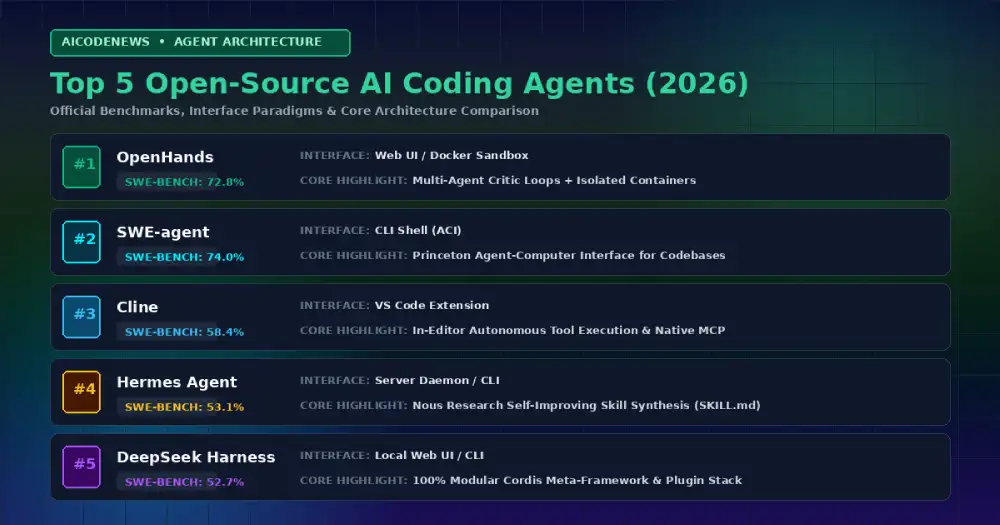
Before examining each tool individually, here is the complete head-to-head leaderboard comparing the Best Open-Source AI Coding Assistant frameworks across SWE-Bench scores, interfaces, local model support, and key architectural strengths:
OpenHands is the premier open-source autonomous software engineering platform. Running inside an isolated Docker container with its own virtual workspace, browser, and bash terminal, OpenHands achieved a massive 72.8% score on SWE-Bench Verified by utilizing inference-time scaling and multi-agent critic loops to self-correct code patches.
Why Developers Love It: Perfect for autonomous background tasks like refactoring legacy modules or solving backlog GitHub issues overnight while maintaining strict container security boundaries.
2. SWE-agent & mini-SWE-agent: Princeton’s SOTA Research Harness
Built by researchers at Princeton and Stanford University, SWE-agent pioneered the Agent-Computer Interface (ACI)—a specialized terminal shell designed specifically to help LLMs navigate, search, edit, and test massive code repositories efficiently without drowning in terminal noise. Its lightweight successor, mini-SWE-agent, scores up to 74% in just 100 lines of Python.
Why Developers Love It: Exceptional file-search and syntax-aware viewing tools that prevent models from getting lost in 100k+ line codebases.
Cline (formerly Claude Dev) is an open-source VS Code extension that operates as a full-fledged autonomous agent inside your editor. It reads your project structure, executes terminal commands, edits multiple files simultaneously, and asks for human confirmation before running destructive actions.
Why Developers Love It: Cline features native Model Context Protocol (MCP) integration, allowing you to connect SQLite databases, browser automation tools, and local documentation servers directly into your editing workflow.
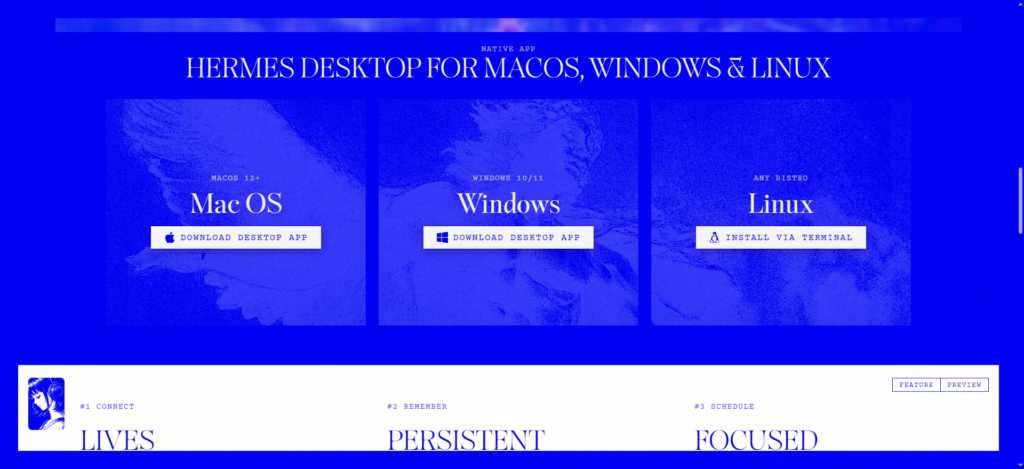
Developed by Nous Research, Hermes Agent breaks the amnesia cycle of traditional AI assistants. When it solves a difficult debugging or refactoring problem, it automatically compiles its trajectory into a permanent SKILL.md file, becoming faster and smarter every time you run it.
Why Developers Love It: Combines persistent SQLite FTS5 memory with autonomous skill generation, ensuring you never have to re-explain your repository layout or mock test harnesses.
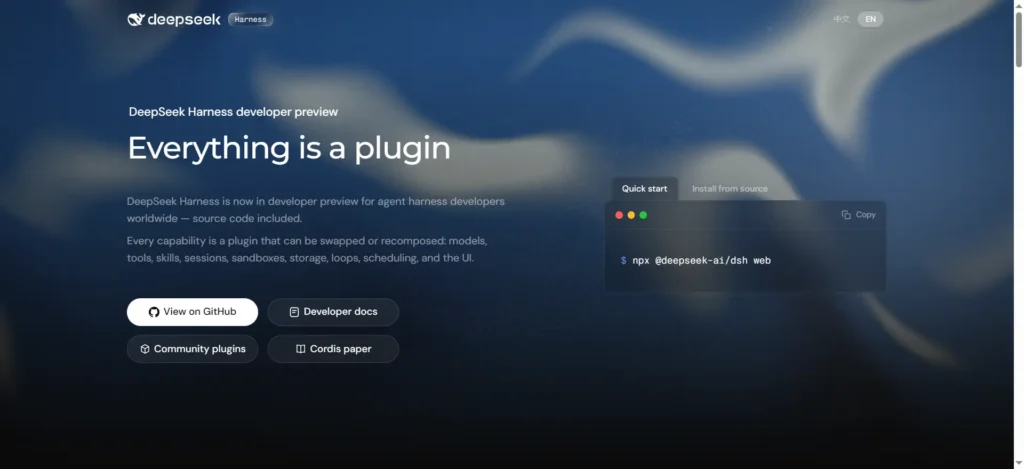
Surging past 144K GitHub stars, DeepSeek Harness is an MIT-licensed agent runtime built on the Cordis meta-framework. It eliminates the concept of a privileged core—every capability (model adapters, tools, sandboxes, and the decision loop itself) is a swappable plugin.
Why Developers Love It: Backed by formal mathematical proofs from Peking University and DeepSeek, it lets developers customize every aspect of agent behavior by mounting lightweight plugins rather than maintaining complex project forks.
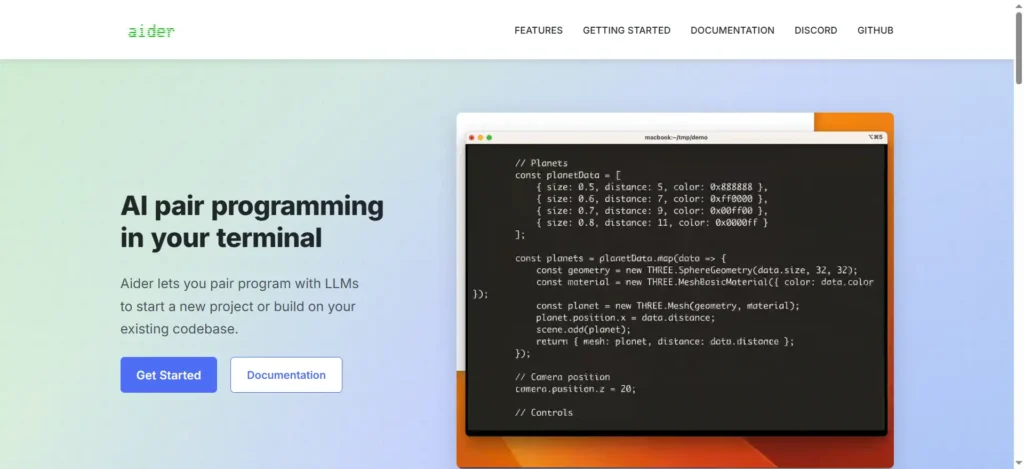
Aider is the pioneer of terminal-based pair programming. It connects directly to your local Git repository, builds a compact map of your entire project syntax tree using Tree-Sitter, and automatically writes clean, git-committed code changes.
Why Developers Love It: While autonomous agents like OpenHands focus on long multi-turn batch benchmarks, Aider remains the fastest interactive CLI for developers who want instant, git-committed edits while coding side-by-side with an LLM.
Continue is the most flexible open-source extension for developers who want inline code completion and custom chat sidebars across both VS Code and JetBrains IDEs.
Why Developers Love It: Unmatched local model routing. You can pair an ultra-fast local Ollama model (like Qwen3.8-27B) for instant tab autocomplete while routing complex architecture questions to Claude or DeepSeek.
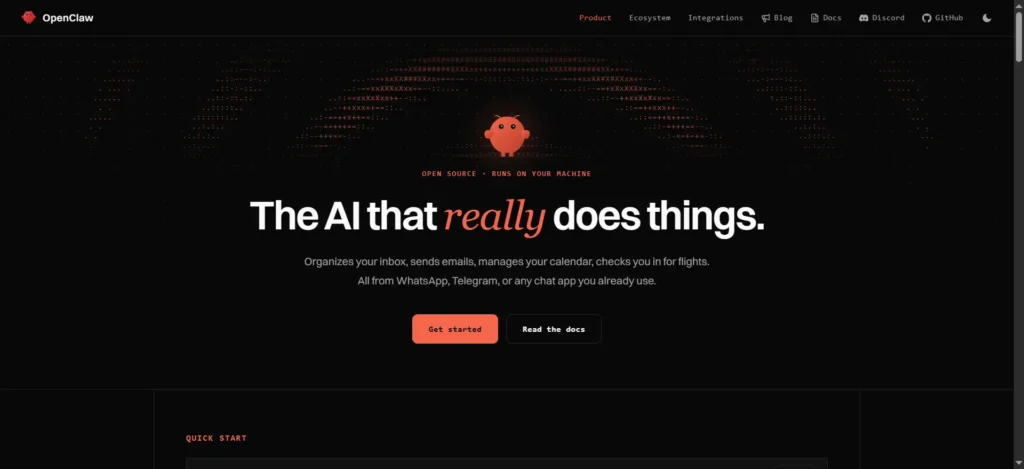
OpenClaw transforms messaging apps (Telegram, WhatsApp, Discord, Slack) into a 24/7 control plane for your local development machine. You send a message from your phone, and the agent executes terminal commands, writes code, and sends you the pull request link.
Why Developers Love It: Runs seamlessly in the background on an always-on Mac mini or Linux VPS, turning routine DevOps and script execution into simple mobile chat conversations.
Tabby is a dedicated on-premise AI coding server designed for enterprise engineering teams with strict compliance and data security requirements. It indexes your internal Git repositories to provide context-aware autocomplete without sending a single token outside your company firewall.
Why Developers Love It: Self-contained Docker deployment with built-in hardware acceleration for consumer Nvidia GPUs and enterprise clusters.
Melty and Kilo Code represent the emerging wave of open-source AI-native IDEs that integrate directly with compiler diagnostics, tracking every keystroke and compiler error to refine generated code in real time.
Why Developers Love It: Transparent, open-source codebases with native interactive diff viewers that make reviewing AI-generated code fast and reliable.
3. How to Choose the Best Open Source AI Coding Assistant for Your Workflow
Selecting the Best Open Source AI Coding Assistant depends on your primary editing environment, hardware setup, and autonomy requirements:
Choose OpenHands or SWE-agent if: You want top-tier benchmarked autonomous problem solving in isolated Docker environments for complex GitHub issue resolution.
Choose Cline if: You prefer working inside VS Code and want an autonomous in-editor agent powered by Model Context Protocol (MCP).
Choose Aider if: You work primarily in the terminal and want fast, interactive Git-committed pair programming.
Choose Continue.dev if: You want private, local inline tab autocomplete in VS Code or JetBrains powered by a local Ollama model.
Choose Hermes Agent or DeepSeek Harness if: You want self-improving agents with compounding skills or modular plugin architectures.
Choose Tabby if: You are an engineering lead looking for an on-premise, enterprise-compliant alternative to GitHub Copilot.
4. Frequently Asked Questions (FAQ)
Can an open source AI coding assistant run 100% offline?
Yes. Tools like OpenHands, Aider, Continue.dev, Tabby, and OpenClaw can connect directly to local inference engines like Ollama or vLLM running quantized open-weight models (such as Qwen3.8-27B or DeepSeek V4), providing completely private coding assistance with zero internet connectivity.
How does SWE-Bench measure AI coding performance?
SWE-Bench tests AI models and agents against real-world, end-to-end GitHub issues from popular open-source repositories. To solve an issue, the agent must read the codebase, locate the bug, write a multi-file patch, and pass the repository’s actual unit and integration test suites.
Are open-source coding assistants free to use?
Yes, all 10 tools ranked in this guide are open-source under permissive licenses (MIT or Apache 2.0). The only cost is the API tokens you consume (if using commercial endpoints like Claude or DeepSeek) or the electricity required to run local models on your own hardware.
5. Key Takeaways
Open-Source Parity: Modern autonomous open-source systems like OpenHands (72.8%) and mini-SWE-agent (74.0%) rival commercial benchmarks on SWE-Bench Verified.
Specialized Roles: OpenHands and SWE-agent dominate autonomous issue solving; Cline leads in-editor MCP workflows; Aider excels at interactive CLI pairing.
Self-Hosted Privacy: Open-source assistants allow developers to build completely private, air-gapped development stacks using local LLMs.
Bookmark AICodeNews.com for daily updates on open-source AI coding tools, LLM benchmarks, and developer engineering guides.
1. Core Architecture & Hardware Requirements for Qwen 3.8 27B
Unlike massive cloud-only Mixture-of-Experts clusters, Qwen 3 8 27B strikes an optimal balance between parameter scale and local developer accessibility.
Single-GPU Deployment: In 4-bit GGUF or official FP8 precision (Qwen3.8-27B-FP8), Qwen 3.8 27B fits comfortably inside a single 24GB GPU (such as an Nvidia RTX 3090 or 4090) or a modern Apple Silicon Mac with 32GB of unified memory.
55.6 GB BF16 Weights: The official repository provides 18 shards of uncompressed BF16 safetensors alongside official FP8 quantized checkpoints.
Permissive Apache 2.0 License: Organizations can deploy Qwen 3.8-27B in commercial SaaS products, private on-prem clusters, and terminal coding agents with zero licensing fees.
2. Benchmark Performance in Software Engineering Workflows
Early developer testing across developer communities indicates that Qwen 3.8-27B rivals larger 70B parameter models on code completion, multi-language translation, and function calling.
SWE-Bench & HumanEval: Scores within striking distance of proprietary closed endpoints while operating entirely offline on private workstations.
Ecosystem Integration: Day-one support across llama.cpp, Ollama, vLLM, SGLang, and Unsloth makes running the model locally effortless.
3. Key Takeaways
Official Hugging Face Release: Qwen 3.8-27B is now live under Apache 2.0.
Consumer Hardware Friendly: Runs locally on single 24GB GPUs and 32GB Mac Studios using FP8 and 4-bit quantizations.
Zero API Dependency: 100% private, self-hosted coding intelligence with no per-token costs.
Bookmark AICodeNews.com for daily updates on open-weight AI releases, local model deployment guides, and developer tooling.
Artificial intelligence research firm Z.ai has launched glm 5.3, a groundbreaking open-weights model setting new industry standards for frontier coding and cyber capabilities. Built strictly by scaling post-training on the architectural stack established by its predecessor, it demonstrates that massive reinforcement learning (RL) on long-horizon task environments can yield immense performance gains without altering the base model.
GLM 5.3 – A New Standard for Autonomous Coding
For complex software engineering, glm 5.3 delivers a major 50% improvement over GLM-5.2 on Z.ai’s private Code Bench. The model handles intensive production tasks, taking full ownership of end-to-end infrastructure diagnostics and code optimization rather than relying on humans to decompose problems.
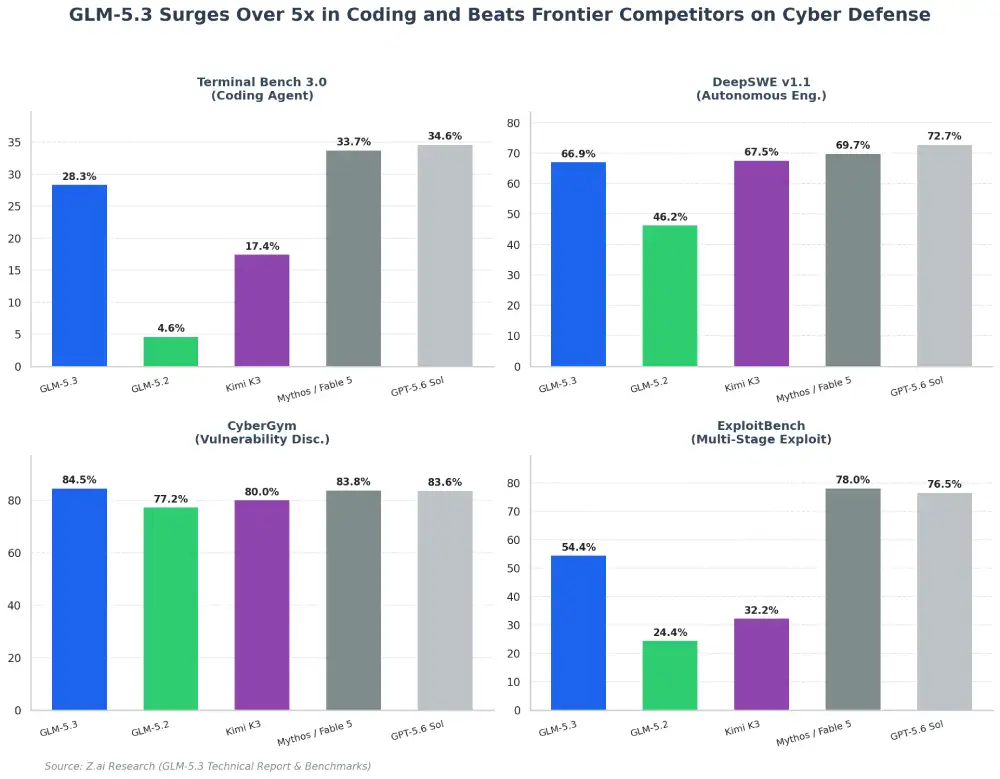
These post-training advancements are validated on public benchmarks. On Terminal Bench 3.0, glm 5.3 surged to a score of 28.3, up from 4.6 for GLM-5.2. It also scored 66.9 on DeepSWE v1.1, compared to 46.2 previously. These coding breakthroughs are powered by Z.ai’s open-source slime framework and SAO with compaction RL strategies, ensuring these gains hold over long-horizon workflows.
Emergent Cyber Defense
During post-training, the model developed highly advanced cyber capabilities. Rather than just identifying isolated flaws, glm 5.3 reasons across complex, multi-stage exploitation chains. It achieved state-of-the-art results on CyberGym with an 84.5% score and more than doubled its predecessor on ExploitBench with a 54.4% score.
In real-world security trials across 269 open-source projects, glm 5.3 successfully identified 2,436 vulnerabilities—including 1,097 critical and high-severity issues. These flaws spanned system operating systems, operating kernels, and web applications. Remarkably, these issues lived undetected for an average of 26.6 years, with the oldest vulnerability dating back to 1981.
Release and Availability
Developers can soon run glm 5.3 locally, as Z.ai will release the open-source weights in two weeks. The model is available via the Z.ai Coding Plan and features three customizable thinking effort levels: low, high, and max
Follow AI Code News for more news about AI and Coding.